

Strategies for Overcoming Adversity
The journey through cancer, a path lined with trials and transformations, redefines survival into something more profound: thriving. Battling cancer not only once but twice, we, the male cancer survivors, learn that thriving is not merely a matter of enduring treatments but an active engagement in reshaping our lives.
With each challenge we overcome, our collective resilience emerges stronger, as does our ability to adapt, finding solace in the solidarity of shared experiences.
We navigate this road together, supporting each other in deciphering complex information and making enlightened decisions about our treatment and post-recovery lifestyle.
Embracing a sports mindset, we set goals, develop strategies, and draw strength from envisioning ourselves not as patients but as athletes in the ultimate test of endurance.
Nutrition and metabolism become our allies, and through understanding and adjusting our diets, we harness energy to fuel our bodies for the ongoing battle and recovery.
Key Takeaways
- Thriving as a cancer survivor extends beyond treatment to embracing a transformative lifestyle.
- Unity and shared wisdom empower us in the quest for informed decision-making and resilience.
- Nutrition and metabolism are crucial in our journey, providing energy for healing and adaptation.
Understanding Cancer
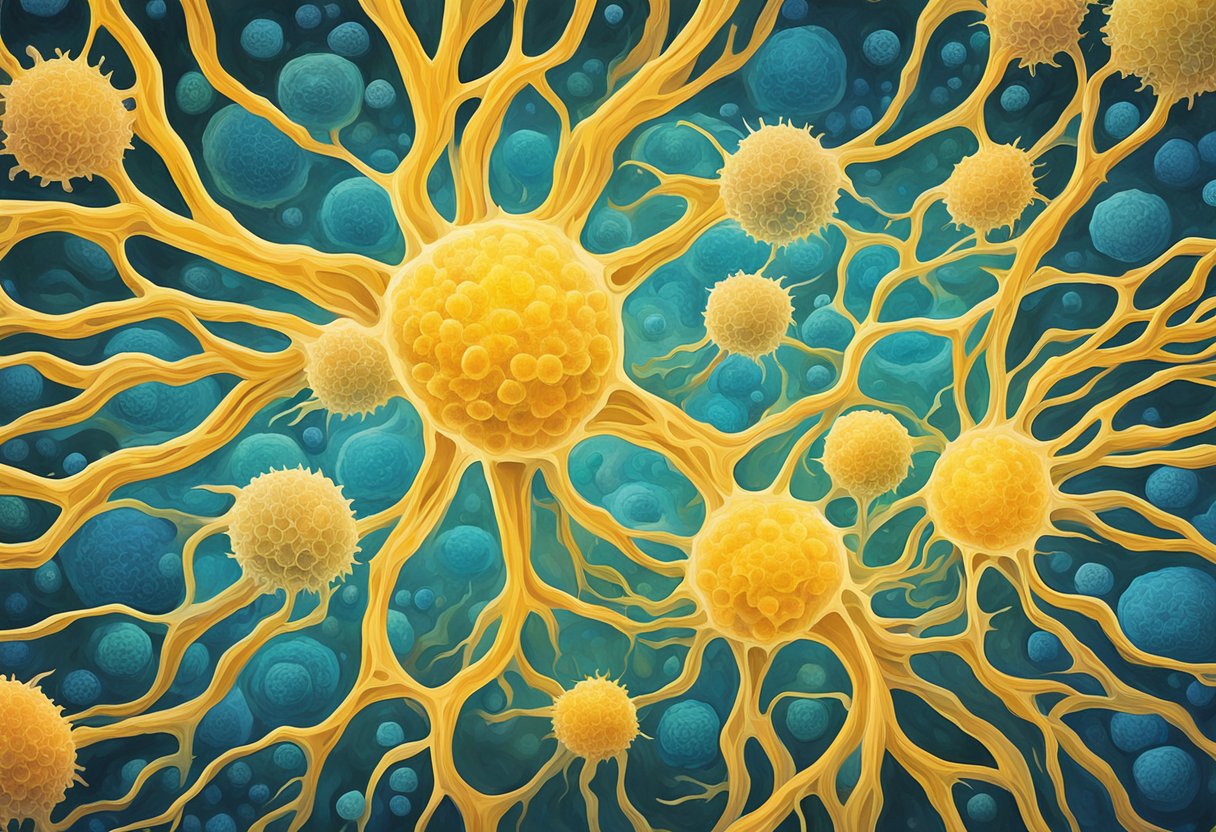
As survivors, we are uniquely equipped to shed light on the journey from diagnosis to adapting to life post-cancer. Let’s explore the intricacies of this disease together.
Types of Cancer
Cancer encompasses a diverse range of diseases characterized by the uncontrolled growth of cells. Among males, cancers such as prostate cancer, colorectal cancer, and lymphoma exemplify the myriad forms this disease can take.
Each type originates from specific cells and affects the body differently, underscoring the necessity for tailored approaches during and after treatment.
- Prostate Cancer: A common malignancy in males, often linked to age and family history.
- Colorectal Cancer: Develops in the colon or rectum, influenced by dietary habits and genetic factors.
- Lymphoma: Affects the lymphatic system, and our collective resilience has proven that even a challenging diagnosis can be faced head-on.
Cancer Cells and Disease Progression
At our core, we have learned that cancer cells display remarkable cellular heterogeneity, meaning they can differ dramatically in their function and response to therapy.
It’s a bit like a team where every player brings a unique strength to the field—some cancer cells may increase while others remain dormant. Factors like genetic mutations play a crucial role in this diverse behavior.
For instance, pancreatic cancer cells can adapt to thrive even under the stress of chemotherapy, demonstrating an unsettling robustness.
Diagnosing Cancer
We know that the journey to a cancer diagnosis often begins with recognizing symptoms, followed by a barrage of tests to ascertain the presence of cancer cells.
A diagnosis typically involves imaging tests like CT scans, blood tests, or biopsies, which provide a glimpse into our cellular makeup.
Embracing these steps with determination is part of our playbook for tackling the disease. With pancreatic cancer, for instance, early diagnosis is the key to a game plan that might include novel treatment strategies.
Adapting to the Diagnosis
When we receive a cancer diagnosis, the journey before us demands both resilience and a readiness to adjust our sails in the face of new challenges.
Emotional Impact
We must acknowledge the whirlwind of emotions that can besiege us as we confront the diagnosis. From disbelief and fear to a sense of isolation, our emotional landscape takes a hit.
We may grapple with stress that seems to tighten its grip, but through honesty with ourselves and embracing vulnerability, we lay the groundwork for healing and growth.
Seeking Support
Connecting with a network becomes our lifeline. We lean on family, friends, and especially fellow survivors who echo our experiences.
Communities offer a platform to exchange stories, fostering an atmosphere where strength and hope flourish.
Equally, caregivers assist with daily tasks and provide unwavering emotional backing.
Awareness about our condition and available support is pivotal as it steers us towards resources tailored to our needs. In camaraderie, we find the stamina to press on and transform adversity into triumph.
Treatment Strategies

In our journey as cancer survivors, we meticulously select our treatment courses to combat the disease and reclaim control over our bodies effectively.
Chemotherapy
Chemotherapy remains a cornerstone in cancer treatment, targeting rapidly dividing cancer cells. Yet, the experience has taught us that drug resistance can emerge, undermining chemo’s efficacy.
I remember our community’s relief upon learning that adaptive strategies, like altering dosages, could potentially forestall or even counteract this resistance, as outlined in a Nature article.
Our commitment lies in staying informed about clinical trials that might offer newer, more effective chemo options.
Radiation Therapy
Radiation therapy targets malignant regions, sparing as much healthy tissue as possible.
We’ve discovered that this therapy can work either as a standalone or with other treatments to shrink tumors effectively.
By keeping up-to-date with the latest radiation techniques, we ensure we’re tapping into treatments that minimize side effects while maximizing cancer cell eradication.
Surgery Options
For many of us, surgery offers a tangible means to remove cancer from our bodies. When evaluating this option, we consider factors like tumor size, location, and the potential impact on our quality of life.
Our shared experiences highlight that surgery, while often successful, also requires thorough discussion about recovery and the potential for additional therapies post-operation.
Emerging Therapies
Emerging therapies ignite hope in our hearts. These include treatments on the cutting edge of science, such as immunotherapy, which harnesses our immune system’s innate power to fight cancer.
We keep a keen eye on advancements reported in ScienceDirect, ensuring we’re knowledgeable about options beyond the traditional scope.
Homeopathy also comes up in discussions, although we prioritize evidence-based treatments grounded in rigorous clinical research.
The Role of Nutrition and Metabolism
Our journey after cancer is paved with adjustments that bolster our resilience—embracing carefully chosen diets and understanding how our metabolism shifts can play a pivotal role in our daily lives.
Dietary Considerations
We know that our bodies require fuel to function optimally. Post-cancer, the quality of this fuel becomes indispensable.
A balanced diet rich in vegetables, fruits, and lean proteins can support our body’s recovery.
Nutrition is not just about eating; it’s about feeding our body with compounds that can potentially aid cellular repair and strengthen our immune system.
- Vegetables and Fruits: Include a variety of colors in every meal.
- Proteins: Opt for lean sources like fish and poultry or vegetarian alternatives like beans.
- Whole Grains: They provide essential fibers and help maintain energy levels.
Emphasizing nutrition post-cancer can influence our overall well-being. For instance, adequate intake of specific nutrients can affect the speed and quality of our recovery process.
Metabolic Pathways
Our body’s metabolism encompasses the biochemical processes that occur within us, including glycolysis and functions of the mitochondria.
After surviving lymphoma twice, we become acutely aware of how pivotal our metabolic health is.
Cancer can alter these metabolic pathways, making understanding and adjusting to these changes imperative for our continued vitality.
Post-treatment, our fitness routines can help recalibrate our metabolism. This includes activities such as:
- Resistance Training: Builds muscle, which can help increase metabolic rate.
- Cardiovascular Exercises: Enhances mitochondrial function and boosts metabolism.
Coping Mechanisms and Quality of Life
As survivors, mastering coping mechanisms significantly elevates our quality of life.
Our journey through cancer treatment, particularly the shared experience of lymphoma, teaches us resilience and the necessity of stress management and finding moments of happiness and significance.
Managing Stress
The integrated stress response is critical in our body’s ability to manage challenges.
We have learned techniques that modulate this response, improving our stress tolerance and, by extension, our well-being.
Routine exercise, such as a daily jog or a friendly game of basketball, has proven to be an exemplary strategy for mitigating stress.
Moreover, practices like mindful meditation serve as a foundation for mental fortitude.
Finding Joy and Purpose
We unearth joy and purpose, not in grand gestures but in the subtle textures of daily life.
Engaging in hobbies that spark enthusiasm offers us a sense of normalcy and fulfillment.
We embrace roles that instill a sense of contribution, from volunteering at local events to mentoring young athletes, ensuring that our experience has a positive impact.
Through this, we discover that our capacity for joy is a beacon, guiding us to a higher quality of life and a brighter tomorrow.
Navigating Financial and Legal Resources

As survivors, we face not only health battles but financial and bureaucratic ones.
Mastering these fronts is key to our continued recovery and well-being.
Understanding Healthcare Costs
Healthcare costs can be daunting, and comprehending them is the first step in managing our survival journey effectively.
We must thoroughly review our insurance coverage to grasp what treatments and medications are covered.
Occasionally, we encounter new therapies that might offer better outcomes, but they could come with substantial expense.
Learning about financial navigation services within national cancer institutes can guide us in handling such costs.
Accessing Grants and Assistance
We’re not alone in this—grants and financial aid programs exist to support us.
Organizations like The Leukemia & Lymphoma Society assist individuals with blood cancers.
They set caps on the aid a person can receive annually, but these funds can be a lifeline.
Additionally, we can seek out community-based grants specifically designed for us, the men who have shown extraordinary courage and persistence in the face of cancer.
- List of Potential Financial Aids:
- Health insurance coverage reviews
- Non-profit assistance programs
- Community-based grants
Through learning the financial ropes and tapping into available resources, we can ensure that monetary pressures do not compromise our fight for health.
Let’s stand united and resourceful, securing a future where our survival reflects our resilience.
Empowerment and Survivorship
As we embrace survivorship, empowerment emerges as a crucial part of our journey.
We find strength and foster a thriving culture by adapting to new realities and forging bonds within our community.
The Survivor Journey
We know the path to recovery is unique for every survivor.
Adopting a resilient mindset becomes essential in navigating the aftermath of cancer.
For us, men who have battled through the storms of lymphoma cancer, not once but twice, resilience is not just a choice; it’s a necessity.
Our ability to adapt shapes our survivorship, transforming us into thrivers.
In this process, we acquire more than just knowledge; we gain profound insight into self-care practices that help us regain control of our health and well-being.
Building a Thriving Community
Creating a nurturing community is central to our continued well-being.
Participation in sports and fitness activities is a powerful catalyst for us, fostering camaraderie and physical wellness.
We form support groups where shared experiences lead to collective empowerment.
Within this community, we discover diverse perspectives that inspire solution-based discussions, allowing us to address challenges head-on and advocate for recovery resources tailored to our needs.
Let’s pull together, play together, and prove that thriving is a team sport.
On The Other Hand

We are adapting to life after cancer poses unique challenges, particularly for us men who have faced this battle.
In our journey to recovery, embracing change isn’t just a choice; it’s an essential step for survival.
Adaptation Strategies:
- Physical Regimen: Maintaining a steady exercise routine can fortify our bodies and improve resilience.
- Dietary Choices: Opting for nutrient-rich foods supports bodily functions and boosts vitality.
- Community Interaction: Engaging with fellow survivors through support groups creates a robust support network.
- Mindset Shift: Fostering a growth mindset helps us appreciate life post-recovery and embrace our new normal.
As survivors of lymphoma, we have had to recalibrate our existence.
We had to harness the tenacity to rematch with life, turning trials into triumphs.
The adaptation narrative doesn’t negate the fact that some opinions diverge.
There’s a belief that focusing too much on adaptation might overshadow the need for ongoing medical support.
But, this viewpoint often misses the essence of adaptation—it’s not a substitution for medical care but a complementary approach.
Engaging in sports, for example, bolsters not just our physical health but also our mental fortitude.
We recognize that despite the difficulties, there’s a path to thriving post-cancer.
Our experiences are a testament to the human spirit’s capacity to reconstruct life, piece by piece.
This collective strength and determination underline our shared goal: not just to survive but to lead a life marked by resilience and purpose.
Final Thoughts
As individuals who’ve braved cancer trials, we understand that the capability to adapt defines our journey.
We stand together, a band of men who have weathered the storm of uncertainty and emerged with a new purpose.
Adaptability: A Key to Thriving
- Resilience building
- Mastery of new routines
- Active lifestyle choices
We’ve learned that an active lifestyle forms the backbone of our resilience.
Engaging in sports, for example, can do more than rebuild our physical strength; it unites us with others who share our challenges and triumphs. It fosters camaraderie, which nourishes our mental and emotional well-being.
Embracing change, we recalibrate our lives around what we can do: seeking new hobbies, nurturing relationships, and sharing our experiences to light the path for those who will follow.
Our conversations are not just exchanges of words but of hope and strategies for facing each day with determination.
Our collective story is one of tenacity.
In our toolkit, empathy is as crucial as knowledge.
We extend a hand to every brother navigating this path, offering solace and practical advice.
To adapt is to survive, but more profoundly, it is to thrive.
Together, we forge ahead, turning obstacles into stepping stones toward fulfilling lives post-cancer. -T
Frequently Asked Questions
As survivors of lymphoma, we often search for ways not only to cope but to thrive after our diagnosis. Our ability to adapt plays a crucial role in navigating this path successfully.
How can patients foster resilience during cancer treatment?
We can promote resilience by maintaining a support network and focusing on mental and physical wellness.
Acts as simple as engaging in daily physical activity and keeping a gratitude journal can empower us during treatment.
What are effective strategies for thriving, not just surviving, with cancer?
To thrive, we must adopt a proactive mindset.
This includes setting achievable goals for ourselves, whether in pursuing hobbies or adjusting nutritional habits, that bring us joy and a sense of accomplishment.
What lifestyle changes may contribute to increased survival rates for cancer patients?
Adopting a diet rich in nutrients and low in processed foods, maintaining a healthy weight, and staying physically active are all lifestyle changes that contribute to our well-being and can potentially improve survival rates.
In what ways does the Warburg effect influence cancer progression and patient adaptation?
The Warburg effect, a phenomenon where cancer cells produce energy predominantly through glycolysis, affects cancer progression.
Understanding this process can lead us better to manage our health through metabolism-focused diet and treatment options.
Which coping mechanisms are most beneficial for cancer thrivers?
We find strength in coping strategies that align with our values and those that keep us connected with others.
Mindfulness and stress-reduction techniques are particularly beneficial for sustaining our mental health.
What are the most significant challenges when curing the most resilient forms of cancer?
The most significant hurdle lies in the remarkable adaptability of cancer cells themselves.
They can evolve resistance to chemotherapy. Therefore, we need relentless innovation in treatment strategies to tackle these challenges.
