

Overcoming Negativity on the Path to Wellness
Cynicism can cast a long shadow over one’s life experience, particularly when facing a monumental challenge like cancer. As someone who’s navigated the turbulent waters of lymphoma not once but twice, I’ve confronted the pitfalls of a cynical outlook firsthand. It often masquerades as realism, but beneath its guise lies a corrosive effect that can dampen the spirit and hamper recovery.
Acknowledging and transcending this emotion is vital to fostering a mindset that fuels personal growth and healing.

This journey has taught me that becoming a cancer thriver is about more than mere survival; it’s an intricate dance of embracing change, cultivating resilience, and seeking joy amidst the trials.
Men battling cancer encounter unique societal pressures to remain stoic, which can impede open conversations about emotional well-being and the need for robust support systems.
Through active engagement in sports and other physical activities, I’ve bolstered my physical health, found camaraderie, and renewed my sense of purpose.
Key Takeaways
- Recognizing cynicism’s impact helps shift toward more constructive attitudes.
- Thriving with cancer involves emotional resilience and seeking joy.
- Sports offer a powerful avenue for physical health and community support.
Understanding Cynicism in the Cancer Journey

Having faced lymphoma twice, I’ve journeyed from diagnosis through the thicket of treatment, emerging not just as a survivor but a thriver.
Some men may harbor cynicism, a natural defense against relentless waves of uncertainty when confronted with such a trial. However, while cynicism might offer temporary armor, it can hinder the profound transformation that waits on the other side of adversity.
In the throngs of treatment, thriving seemed a distant dream. Yet, with every small victory, my skepticism gave way to a burgeoning sense of growth. It is the resilience built in the crucible of illness that reshapes us.
Transformation is less about the result and more about the small steps we take every day – each choice to remain hopeful is a stitch in the fabric of change.
- Cancer: A word that echoes with challenges.
- Cynicism: An easy settle, yet a blockade to healing.
- Transformation: Gradual and requires patience.
- Thriving: Attainable with earnest effort.
As men, we’re often taught to mask our fears, but vulnerability is our greatest strength.
In my support group, encouragement flows freely, and we exchange strategies that move us beyond mere survival.
It’s about pivoting toward meaningful activities; sometimes, the rigor of a sport or the quiet reflection after a solo hike ignites the spirit of thriving.
Embracing the cancer journey involves shifting from cynicism to a mindset focused on solutions and growth.
It’s not an overnight flip; it’s an everyday commitment to look for those glimmers of progress that signal the body healing and the spirit renewing itself, ready for a new chapter.
The Cancer Thriver: Beyond Survival

I am not just a cancer survivor but a cancer thriver. Through my twice-conquered journey with lymphoma, I discovered that thriving is not merely about survival; it’s about enriching one’s quality of life despite the odds.
My identity evolved through this crucible of disease, shaping me into a mentor for fellow men navigating these treacherous waters.
As I define it, Thriving encapsulates embracing each day with vigor and determination. It’s a state of being where the focus shifts from enduring to flourishing.
I channel my energies into activities that invigorate my body and elevate my spirit.
Participating in sports, for example, became a keystone of my recovery, reinforcing both physical stamina and camaraderie.
Each man’s experience is unique. Yet, common threads weave through our stories. One such thread is the quest for a positive identity post-diagnosis.
By sharing my narrative, I foster hope and provide a blueprint for transformation beyond mere existence.
The concept of a cancer thriver is deeply intertwined with personal growth and recovery.
I champion a solution-based approach; it is about harnessing inner strength and approaching challenges with clarity and resolution.
My mission is to be a beacon for those striving to reclaim their lives with resilience and dignity.
For fellow survivors, I stand ready to guide, share, and celebrate each step toward thriving.
It’s a testament to our collective fortitude and unwavering spirit in the face of adversity.
Diagnosis and Treatment Options
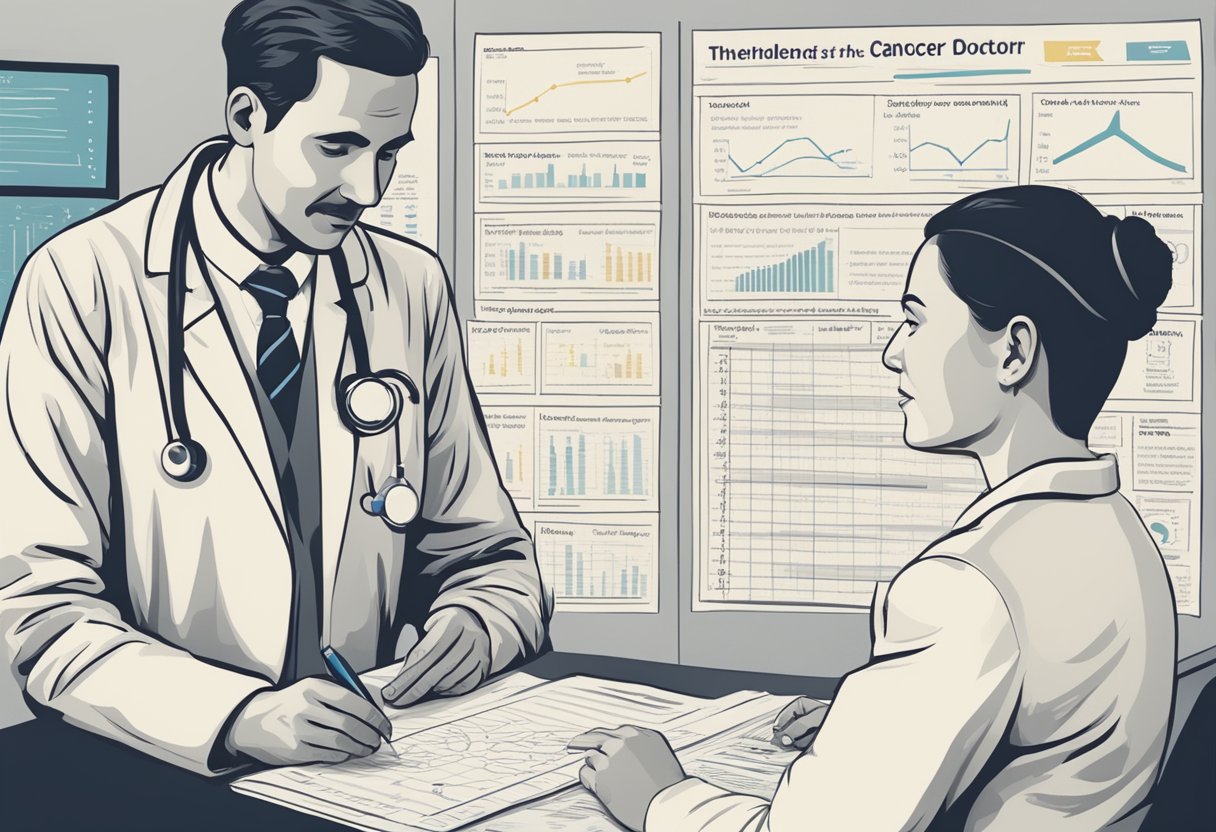
When I received my initial diagnosis, the shock and uncertainty loomed large. Yet, tackling treatment offered a pathway through.
Opting in for diagnosis, typically involving imaging tests and biopsies, allowed my team to understand the extent of the cancer and craft a personalized plan.
In my journey with lymphoma, detail-oriented care laid the groundwork for effective management.
Conventional medicine usually presents a mix of treatments. Personally, chemotherapy stood at the forefront of my plan—one of the most recognized forms of cancer treatment.
It involves powerful medications aimed at eradicating swift-growing cancer cells. But it’s not alone.
Surgery, when feasible, can remove tumors directly. My situation didn’t require it, but many fellow survivors find it an essential step when addressing localized cancers.
Clinical trials can offer hope for recurrent or complex cases, such as those with metastatic developments.
These trials test new treatments and methods that aren’t widely available. They involve cutting-edge science and the chance to access innovative therapies.
My experience paved the way to advocate and guide others, steering them through the maze of options and onto tracks of recovery suited to their needs.
Combining these solutions with steadfast resolve and support systems, I navigated the rugged terrain of cancer—twice.
As men, we often grapple with accepting help, yet I learned that leaning on others and sharing knowledge not only aids in personal healing but also fosters communal resilience.
The Role of Support Systems

In my journey of overcoming lymphoma, not once but twice, I’ve learned that the bedrock of any healing process is a robust support system.
Family and Friends
My family and friends were the core of my daily life, offering unwavering support at every step.
They provided a listening ear, shared in my triumphs and setbacks, and celebrated small victories with me.
My brother, for instance, would accompany me to treatments, turning those moments into a chance for us to bond and laugh, reminding me that joy can be found even in trials.
Community and Advocacy
I found solace and strength within the community and advocacy groups dedicated to men facing cancer.
Being part of a community offered emotional backing and practical advice, from managing side effects to navigating healthcare services.
Joining advocacy efforts gave my experience a purpose beyond my survival as I worked to improve the support for others grappling with similar challenges.
Coping with Emotions and Transformation

As someone who has faced lymphoma not once but twice, I’ve come to recognize that managing emotions is just as crucial as any physical treatment.
Confronting a cancer diagnosis ushers in a rollercoaster of feelings – fear, anger, and despair can overshadow hope, joy, and faith. Yet, a profound transformation can happen amid this storm.
I believe in channeling every ounce of energy into a beacon of light to navigate through darkness.
Here’s how I found solace and strength:
- Acknowledge emotions: Permit yourself to feel every emotion. Denial only intensifies them.
- Seek connections: Engage with support groups. Men grappling with cancer understand the journey.
- Regular physical activity: Choose a sport you love; it bolsters energy levels and sparks joy.
Encouraging positivity is more than a state of mind; it’s a practice.
I daily decide to foster hope and use my faith as an anchor.
This means meditation, connecting with my community, and pursuing activities that infuse my life with purpose.
Every man on this path can harness this transformation.
It’s about discovering new perspectives that imbue our daily challenges with meaning.
Remember, every step forward is a step towards triumph, no matter how small.
Embrace this chance for reinvention – it’s a powerful ally on the road to becoming a cancer thriver.
Cancer and Identity: Finding New Purpose
After my first victory over lymphoma, I saw life differently. Surviving twice wasn’t just a personal triumph; it became a beacon of hope for others. The experience reshaped my identity, driving me to embrace a purpose far beyond my journey.
Through the ordeal, I learned valuable lessons about resilience and the power of the human spirit. These insights fuel my dedication to assisting fellow men in navigating this challenging path.
With empathy, I share my story and strategies that helped me stay positive and focused on well-being. Cancer reshaped my world, urging me to use every waking moment to serve others.
Engaging in sports was a cornerstone for my recovery and rebuilding my life. It taught me discipline and the value of community support.
Through coaching and mentoring in soccer, I connect with others, inspiring them to foster strength and camaraderie.
To all warriors out there, remember that your experience with cancer ignites a unique insight. Use it to light up the world around you.
Become a guide to others and, in doing so, discover an enriched sense of self. Let’s team up and navigate this challenging match called life. Together, we can score goals of healing and hope.
Remember, you are more than a survivor. You are a life-changer.
Financial and Practical Assistance
In my journey as a two-time lymphoma survivor, I’ve learned the landscape of support available for individuals like me.
The American Cancer Society offers various resources that help patients manage costs and navigate health challenges. Reaching out to them can be the first step in finding the needed aid.
Financial assistance, though not always publicized, can be a lifeline.
For instance, some programs assist specifically with blood cancers, offering a set aid limit per year. I found it beneficial to discuss options with a team social worker or directly contact organizations such as the Leukemia & Lymphoma Society for tailored assistance.
Practical support also makes a significant difference, simplifying daily life for men battling cancer.
This includes help with transportation to medical appointments, home care services, and nutritional advice catered to our unique health needs.
Here’s a crisp look at resources potentially available:
- Financial Aid Packages: Assess your eligibility for grants or funds to cover treatment-related expenses.
- Insurance Advisory: Engage with experts to understand and optimize your health insurance benefits.
- Support Networks: Connect with fellow survivors for invaluable insight and camaraderie.
Remember, while financial strain is an unfortunate effect of cancer, it need not be a solitary battle. Assistance abounds, and I am always willing to lend a hand or guide you toward a resource that can ease the load. Reach out, and let’s tackle this challenge together. -T
Final Thoughts
As a two-time lymphoma survivor, I’ve come to see life through a lens of relentless determination. On the pitch of existence, every challenge is akin to a fierce competitor that demands strategy, resilience, and teamwork.
To Fellow Survivors:
- Find your squad: The support network is your unbeatable team, cheering you on every step of the way.
- Stay in play: Keep active, whether it’s through football with friends or a solo morning run.
- Game plan for joy: Allocate time for activities that light up your spirit and recharge your mind.
Resilience Training:
- Prepare: Equip yourself with knowledge about your condition. A well-informed player anticipates the game’s flow.
- Strategize: Set personal goals and break them into achievable plays. Small victories lead to significant triumphs.
- Engage: Seek conversations with other men who’ve stood in similar shoes. There’s strength in shared experiences.
Every match day brings a choice. For me, that choice is to live not just as a survivor but as a driven optimist, firmly rooted in the joy of the game rather than its hurdles.
I extend my hand, hoping my story inspires resilience in others. In this battle for health, none of us plays solo—we are on the same side, striving to survive and thrive. -T
Frequently Asked Questions
After overcoming lymphoma cancer twice, I’ve found that facing adversity can profoundly reshape one’s approach to life.
How does overcoming cancer impact a person’s outlook on life?
Each day is a gift and a new chance to embrace opportunities. This mindset often leads to a deeper appreciation for the small joys and a drive to make meaningful life choices.
What are some coping strategies for maintaining mental health during cancer treatment?
I stay grounded through mindfulness exercises and by setting small, achievable goals. These strategies help maintain a sense of control during the whirlwind of treatment.
What are common emotional challenges faced by people who have survived cancer?
We grapple with fear of recurrence and struggle to adapt to the “new normal.” Acknowledging these feelings and seeking support from fellow survivors can provide comfort and understanding.
Can a positive attitude affect the prognosis of cancer patients?
While attitude alone can’t change biology, staying hopeful can lead to better adherence to treatment and self-care, ultimately supporting a favorable outcome.
How do cancer survivors find meaning after their treatment?
I found purpose by mentoring other men facing similar battles. Engaging in meaningful activities can reignite passion for life and forge a path forward.
What resources are available for cancer survivors to help with their mental well-being?
Organizations offer support groups specifically for men. These groups provide a space to express concerns and share experiences, fostering a sense of camaraderie and mutual support.
