

Navigating Recovery with Purpose and Resilience
In the cancer survivorship journey, embracing Primary Intention is vital. It involves a dedicated effort to achieve holistic healing, addressing both the physical and spiritual aspects.
We recognize the importance of primary intention. This is the focused endeavor to heal fully in body and spirit.
As survivors, we commit to a path where our physical recovery is intertwined with our emotional well-being.
We vigilantly incorporate exercise, adequate nutrition, and sufficient rest. We also prioritize psychological support and community building.

As a community of survivors, we understand the value of setting achievable aims that keep us motivated and centered.
We need to forge connections with others who comprehend our struggles, whether through support groups or shared experiences on the playing field.
Our relentless efforts to regain strength and confidence go beyond mere survival. We strive to thrive and encourage others in their battles against cancer.
Key Takeaways
- Cancer recovery is a blend of physical well-being and emotional healing.
- Setting realistic goals and creating support networks bolster survivor resilience.
- Thriving post-cancer involves proactive health management and community engagement.
Understanding Cancer

As we navigate the complex journey of cancer, we must grasp the fundamentals, the various types, and the essential statistics that shape our approach to this disease.
Cancer Basics
Cancer starts when cells in the body begin to grow out of control. These cells can originate anywhere in the body, invade nearby tissues, or spread to other areas through the bloodstream or lymph system.
Distinctly, cancers are named for the area where they originate. For example, lymphoma—a cancer that starts in the immune system—bears its name from the lymphocytes, which are immune cells where it often begins.
Types of Cancer
There are numerous cancers, but they broadly fall into categories based on where they start.
Lymphomas are a category that mainly affects the lymphatic system. We can differentiate lymphomas into Hodgkin’s and non-Hodgkin’s, with the latter being more common.
Non-Hodgkin’s lymphoma has various subtypes and varies in how it affects us and how we respond to treatment.
Statistics and Facts
- Prevalence: In the U.S., cancer ranks as a leading cause of death, with vast numbers facing this diagnosis annually.
- Survival Rates: Medical advancements have increased survival rates, and many of us now live with no evidence of disease.
- Late Stage: For stage 4 cancer, where the disease has spread (metastasized), our goals often focus on managing symptoms and targeting quality of life.
Our resilience shines through our understanding and action. We unite in our shared experience and our fight against cancer, ready to encourage and sustain each other through every challenge.
Diagnosis Journey

In navigating our diagnosis journey, we become acutely aware of how early detection and understanding of the signs can lead to prompt treatment.
Early Signs and Symptoms
Often, we overlook early symptoms or mistake them for less severe conditions.
A persistent cough, unexplained weight loss, or swelling of lymph nodes may not seem alarm-worthy, yet these could be signals from our body alerting us to seek medical attention.
We must listen intently to our physiology. Recognizing changes like these could signify the need for a mammogram or additional screening.
Diagnostic Procedures
Upon noticing symptoms, we should consult a healthcare professional who will likely recommend diagnostic tests.
Among these, imaging techniques such as mammograms play a crucial role. They are pivotal for breast tissue examination, and in a broader sense, similar imaging tools help scrutinize other areas of our bodies for irregularities.
Biopsies are also employed to understand the nature of any abnormal growth further.
Receiving the Diagnosis
Those moments following a cancer diagnosis can feel surreal.
We often received our results in a sterile room with clinical wording that didn’t fully penetrate our shock.
It’s essential to have a supportive hand to hold, whether it’s a friend, family member, or a support group of individuals who’ve trodden this path before.
They transform a medical term into a shared experience, imbuing us with the strength to fight.
Treatment and Management

After facing lymphoma, we understand the crucial role that effective treatment and management play in our journey to thrive.
We embrace each step with resilience, turning challenges into triumphs and becoming a beacon of hope and strength for fellow survivors.
Medical Interventions
We recognize medical interventions as the cornerstone of our recovery.
For many of us, this involves a combination of surgery, radiation, and chemotherapy.
Each modality comes with its purpose: surgery to remove tumors, radiation to target cancer cells, and chemotherapy to halt their growth.
We diligently follow our treatment plans, understanding that these interventions are tailored to our unique health scenarios.
Coping with Treatment
Coping with treatment requires not just physical endurance but emotional fortitude.
We rely on a mixture of counseling, mindfulness, and support groups to navigate this path.
Rest, proper nutrition, and exercise form the bedrock of our physical well-being, while shared experiences and empathy fortify our mental health.
Side effects and tough days test our resolve, but with our support systems and sustaining activities, we persist and overcome.
Clinical Trials and Research
Staying abreast of the latest clinical trials and research empowers us with cutting-edge options.
We proactively seek out new studies that may provide advanced treatments and contribute to the wealth of knowledge fighting cancer.
Participation in trials offers personal hope and the chance to aid fellow men in their battles.
Each new discovery brings us closer to more effective treatments and cures.
The Role of Support Systems
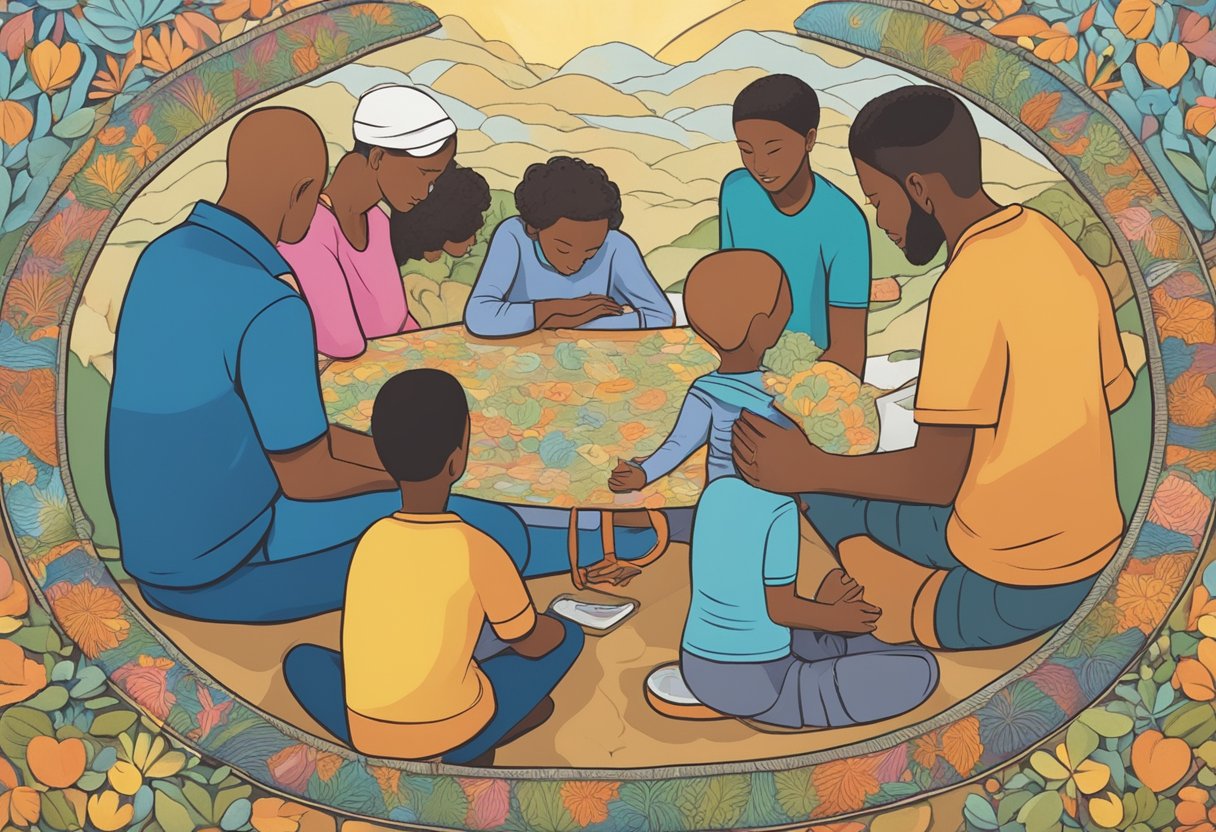
As we navigate cancer survivorship, the comprehensive care we build around us can be a bedrock of our recovery journey.
It’s not just about medical treatments; it’s about nurturing connections that fortify our spirit and encourage us to face challenges confidently.
Family and Friends
Our families and friends often serve as the first layer of support.
They know us intimately and can provide personalized care rooted in love and long-standing relationships.
In these connections, we find a reliable haven where our fears can be shared, and our small victories celebrated.
Friends can also offer a much-needed diversion, reminding us that joy exists beyond our diagnosis.
- Advocate: Family members often help communicate with healthcare providers, ensuring our needs are met.
- Caregiver: Friends may assist with daily tasks, alleviating the physical toll of treatment.
Support Groups and Community
Within support groups, we discover comradeship with those who genuinely comprehend our struggles.
These forums offer a space where our experiences are mirrored and understood, making them a potent source of comfort and practical advice.
Community initiatives, whether local events or online forums, also play a vital role by expanding our support network to include others who, although they may not know us, stand with us in our fight against cancer.
- Education: Community programs can provide information on managing side effects and improving quality of life.
- Networking: Through forums and events, we form connections that may lead to new resources and coping strategies.
Healthcare Providers as Allies
Our healthcare team isn’t just a group you visit for treatment; they are allies on our path to wellness.
Oncologists, nurses, and counselors can offer medical care and emotional sustenance.
They are the architects of our treatment plans and the guiding force in helping us understand and navigate the complex journey of cancer survivorship.
- Expert Care: Providers tailor treatments to our specific type of lymphoma, monitoring progress and adjusting as necessary.
- Emotional Support: Oncology social workers and psychologists specialize in assisting us in coping with the psychological challenges of cancer.
Living as a Cancer Thriver
We understand that thriving after cancer is more than just surviving; it’s a continuous, empowering journey shaped by our unique experiences and the deliberate choices we make to live fully.
Embracing the Cancer Journey
We discover strength in our cancer experiences, recognizing each challenge as a chance to grow and transform. As thrivers, we face our journey head-on, knowing that our actions and perspectives forge a path beyond survival.
We engage in proactive measures like helpful nutrition and regular exercise. Each step is purposefully taken to enhance our physical and mental well-being. Our dual bouts with lymphoma have not only humbled us but also granted us the ability to lead by example, forging a bond with fellow men navigating their paths through cancer.
Cancer and Identity
Our identity intertwines with our cancer journey, yet it does not entirely define us. We see transformation in our reflection – not solely as cancer survivors but as men who have emerged with a newly forged identity.
This newfound self encompasses both the vulnerability we’ve faced and the empowerment we’ve achieved. We adapt, adopting mindful approaches to preserve our sense of self and inspire other men in the cancer community.
Lifestyle and Mindset Changes
We embrace lifestyle and mindset changes with open arms, understanding that this overhaul is beneficial and crucial for our sustained quality of life.
Our tables are colorful with nutritious food, our mornings begin with exercise discipline, and our nights are dedicated to restful rejuvenation.
Meeting with fellow survivors on the basketball court or cheering each other on during local marathons strengthens our resolve and camaraderie. This is not just about recovery but a common quest for vitality.
- Nutrition: We fuel our bodies with what they need to repair and thrive.
- Exercise: Each stride we take is a statement of our perseverance.
- Rest: We underline the need for rest, knowing it’s just as vital as any treatment.
- Support: Together in support groups, we exchange stories, sanity, and strength.
- Goals: We carve back to a life we cherish by setting achievable goals.
Psychosocial Aspects

As survivors, we find ourselves on a journey of renewal, where nurturing mental, emotional, and spiritual health becomes as crucial as physical healing. We join forces to rebuild our lives with newfound purpose and confront the worries and uncertainties that once loomed large.
Mental and Emotional Health
We remember the days when our thoughts were clouded with concern for the future. Mental and emotional wellness now stands at the forefront of our recovery.
Counseling, mindfulness practices, and relentless support from fellow survivors have shown us strategies for restoring our serenity.
We share and listen, acknowledging each other’s battles with courage and gratitude, forging a bond that fortifies our collective resilience.
Finding Purpose and Hope
In the aftermath, we seek meaning beyond our battles with lymphoma. Engaging in sports gives us a metaphor for strength and a literal space for regaining vitality.
Volunteer work and advocacy align with our vision of making a tangible difference. We celebrate each small victory, letting each one cultivate a steady growth of hope and purpose in our lives.
Overcoming Fear and Uncertainty
Mutually, we face the shadow of fear and the specter of uncertainty. Yet, together, in the spirit of teamwork much like that found on the playing fields, we turn those fears into actionable plans.
We foster the courage to stare down these challenges, equipping ourselves with information about our condition and treatment effects.
Peer-led support groups become our locker room huddles, providing inspiration and coping mechanisms to navigate the road ahead.
Advocacy and Awareness
As thrivers of lymphoma, we acknowledge the sheer significance of advocacy and the spread of accurate knowledge. We aim to enhance understanding and support for individuals traversing similar paths through our collective voices and actions.
Educational Outreach
We take strides in educational outreach by illuminating our journeys with lymphoma and sharing the triumphs and challenges.
During Lymphoma Awareness Month, we amplify our message, leveraging social media to disseminate survival strategies and educational resources.
Such efforts equip fellow survivors with the tools to navigate their highs and lows.
Lymphoma Awareness Month: Participation in events and campaigns to underscore our survival stories.
Educational Content: Distribution of transparent, engaging materials to explain the cancer experience, from diagnosis to the continuous quest for well-being.
Participating in Advocacy
Our involvement in advocacy goes beyond mere survival; we embody the role of mentors, guiding new members through the nuances of healing and endurance.
We foster a sports-based approach to recovery, emphasizing strength and teamwork consistently:
Engaging: Advocate for policies and resources that address our unique needs.
Supporting: Work alongside organizations that offer tangible aid to men battling cancer.
Frequently Asked Questions
In our journey as cancer thrivers, we’ve come to understand that thriving is not just about survival—it’s about cultivating a fulfilling life despite our challenges.
What differentiates a cancer thriver from a cancer survivor?
We consider ourselves thrivers when we take control of our lives after cancer, not just surviving the disease but thriving despite it. We go beyond recovery, actively participating in our well-being to lead more enriched lives.
How can a positive mindset impact the journey of a cancer patient?
A positive mindset becomes our beacon through the darkest times. It empowers us to face treatment with courage and nurtures our hope for the future, impacting our overall journey profoundly.
What are the most challenging aspects for those transitioning from cancer patient to cancer thriver status?
For us men, accepting vulnerability often stands as a challenge. Embracing our new identity while tackling the physical and emotional scars left behind can test our resolve, but it’s a crucial step towards thriving.
What are the recommended dietary changes for someone with estrogen-positive cancer?
While we don’t address estrogen-positive cancer directly, we can share that mindful eating with a focus on whole foods rich in nutrients supports our bodies during and after treatment, regardless of cancer type.
How do miracle cancer recovery stories influence the hope and perception of cancer patients?
Such stories can instill a sense of boundless possibility, bolstering our hope. We know that each of us has a unique path. Hearing about extraordinary recoveries reminds us of the potential for positive outcomes.
