

Empowering Your Healing Journey

When we face a cancer diagnosis, the term ‘survivor’ often becomes a label, but many of us resonate more with the idea of ‘thriving’ beyond the illness. It’s a testament to resilience, emphasizing surviving and living life to the fullest.
As thrivers, we understand that our journey is unique, with diverse challenges that call for personalized support systems. By connecting with others, we empower ourselves, sharing our strengths and vulnerabilities in a supportive community.
The creation of robust support networks is vital. Such networks comprise family, friends, healthcare professionals, and fellow cancer thrivers. We learn by listening to the experiences of others and engaging in conversations that can carry us through the most challenging times.
Building these communities allows us to exchange valuable insights, from medical advice to emotional encouragement tailored to our needs. It also grants us opportunities to be there for others, contributing our knowledge and empathy to those walking a similar path.
Key Takeaways
- Connection empowers resilience and a thriving mindset beyond cancer.
- Personalized support networks provide strength and tailored insights.
- Our shared experiences strengthen community bonds and individual spirit.
Understanding Cancer Thriver Terminology
When people hear the word “cancer,” a range of terms come to mind, especially for those of us who have faced the challenge head-on. A cancer diagnosis can mark the start of a profound journey, and the language we use to describe our experiences deeply resonates with identity and healing. We, as survivors, know the weight each label carries.
“Cancer survivor” is a term many of us identify with; it speaks to the resilience and persistence required to live through the illness. But for some, the journey doesn’t stop at survival. The word “thriver” often emerges as a symbol of not just enduring cancer but growing and flourishing beyond the shadow of the disease. A cancer thriver might be someone like us who, after the trials of something as serious as lymphoma, chooses to pursue life with vigor and purpose, often serving as an inspiration to others.
Here’s a brief look at these designations:
- Cancer Survivor: One who continues to live after a cancer diagnosis.
- Cancer Patient: Someone currently undergoing cancer treatment.
- Cancer Thriver: An individual who grows, progresses, or prospers despite a cancer journey.
For us men who join this unique fraternity, these terms forge a sense of brotherhood in our quest to overcome and succeed. We exchange stories, support, and strategies, such as integrating wellness routines and establishing goals while maintaining an active lifestyle.
Above all, we believe in talking about our experiences in a way that captures our collective strength and optimism. The words we choose shape our reality, and as thrivers, we aim to lead lives marked by triumph and vitality.
Building a Network of Support
In our journey as cancer thrivers, creating solid support systems is key. This means fostering bonds with not just healthcare professionals but weaving family and friends into a cohesive network that can weather the ups and downs of recovery.
Identifying Reliable Sources of Information
To navigate cancer survival, we need accurate, up-to-date information. Reliable sources are out there – think respected healthcare sites, studies published in trusted medical journals, and advice from oncologists and other cancer specialists. These sources empower us with the knowledge to make informed health decisions.
- Trusted Health Websites: Websites like those run by national cancer organizations offer updated information.
- Medical Professionals: Consultations and follow-ups with our healthcare team provide personalized advice.
- Literature Review: Staying informed through research articles, like those on PubMed, can give us context and understanding of others’ experiences and the latest treatment advancements.
Integrating Family and Friends into Support Networks
Family and friends shape our support networks’ backbone. Conversations about our needs help them understand where they fit in – whether providing transportation to appointments, helping at home, or just lending a listening ear.
- Roles and Responsibilities: Clear conversations about task delegation ensure everyone knows how they can assist.
- Regular Check-ins: These keep our social network informed and engaged with our journey.
- Support Groups: To bolster our network, we can join groups where peers provide understanding from their shared experiences; many can be found through references from healthcare practitioners or on reputable sites like Psychology Today.
With each of us having our unique story with lymphoma, the correct information and a solid personal network are vital. Support from family members, close friends, and connections in support groups gives us strength and knowledge, ensuring no one walks this path alone.
Social and Emotional Support Systems
When we face cancer, the right social and emotional support systems play a critical role in our journey to recovery and long-term resilience. We seek connections where our experiences and challenges are understood without judgment.
Cancer Support Groups
Support groups deliver a haven where we can share our fears and victories with others who truly comprehend the weight of our journey. Here, we engage with peers who empathize with the unique challenges men facing cancer must overcome. These groups often meet in medical centers or community spaces, offering a physical shoulder to lean on.
- In-person meetings offer tangible solace.
- Peer-led discussions foster deep connections.
Companionship in these settings helps us navigate the complexities of our emotions and the practical aspects of living with cancer. These gatherings allow us to express ourselves freely and gain insights from the group’s collective wisdom.
Online Communities and Social Media
In our interconnected world, online support is vital in our daily encouragement. The Influence of social networks on cancer survivors’ self‐management transforms isolation into a network of ever-present support. Platforms like cancer-specific forums and social media groups provide:
- Round-the-clock access: Talk to someone at any time, regardless of location.
- Information sharing: Learn from others’ experiences and coping strategies.
These virtual communities create a space to obtain emotional sustenance, celebrate milestones, and share in the collective strength of survivors who understand. Online support networks remind us that although our paths are personal, we are part of a larger community that thrives through connection and mutual support.
Tailoring Support to Individual Needs

In crafting support systems for cancer thrivers, we weave precise methods to meet distinct personal backgrounds, life stages, and identities. We are emphasizing diversity and honoring each cancer thriver’s journey.
Support for Different Ages and Sexes
We recognize that cancer strikes without preference, affecting young adults, middle-aged individuals, and seniors distinctly. Their experiences with cancer and the types of support they need are nuanced. For young adults, we focus on preserving fertility and maintaining momentum in education and early careers. Middle-aged men often grapple with sustaining their role as family providers, while therapy for seniors prioritizes quality of life and independence. Men, in particular, may seek acknowledgment for their emotional struggles, a side less often addressed.
- Young Adults: Educational support, career guidance, fertility preservation
- Middle-aged men: Financial advice, familial role support, emotional counseling
- Seniors: Health aid assistance, mobility aid, autonomy-focused care
We encounter men of all ages seeking rapport while keeping their dignity intact. In support groups, we gather under the shared banner of survival, celebrating victories and sharing knowledge on navigating this challenging path.
Cultural, Religious, and LGBTQIA+ Considerations
Our cultural heritage and beliefs shape our perspectives and our needs during recovery. For instance, we honor dietary restrictions based on religious practice within our communal meals. We organize translator services for non-English speakers to ensure clear communication.
In the LGBTQIA+ community, challenges are often compounded by existing stigmas. A lack of understanding can create hurdles in receiving quality care. We strive to educate as well as cultivate sensitivity towards the unique needs of LGBTQIA+ cancer thrivers. This includes recognizing and understanding unique risk factors and addressing the mental toll of conflict and confusion that arises from navigating treatment within a healthcare system not always prepared for their specific needs.
- Cultural Sensitivity: Language services, dietary accommodations, observance of traditions
- Religious Respect: Prayer rooms, religious dietary observance, spiritual counseling
- LGBTQIA+ Affirmation: Inclusive support groups, advocacy for equal care
Our camaraderie grows from knowing firsthand the struggle and the resilience required to face cancer. We extend our hand with zeal to each person seeking solace and strength, tailoring the support to resonate with their individuality and to foster an environment where every cancer thriver can prosper.
Treatment and Medical Care
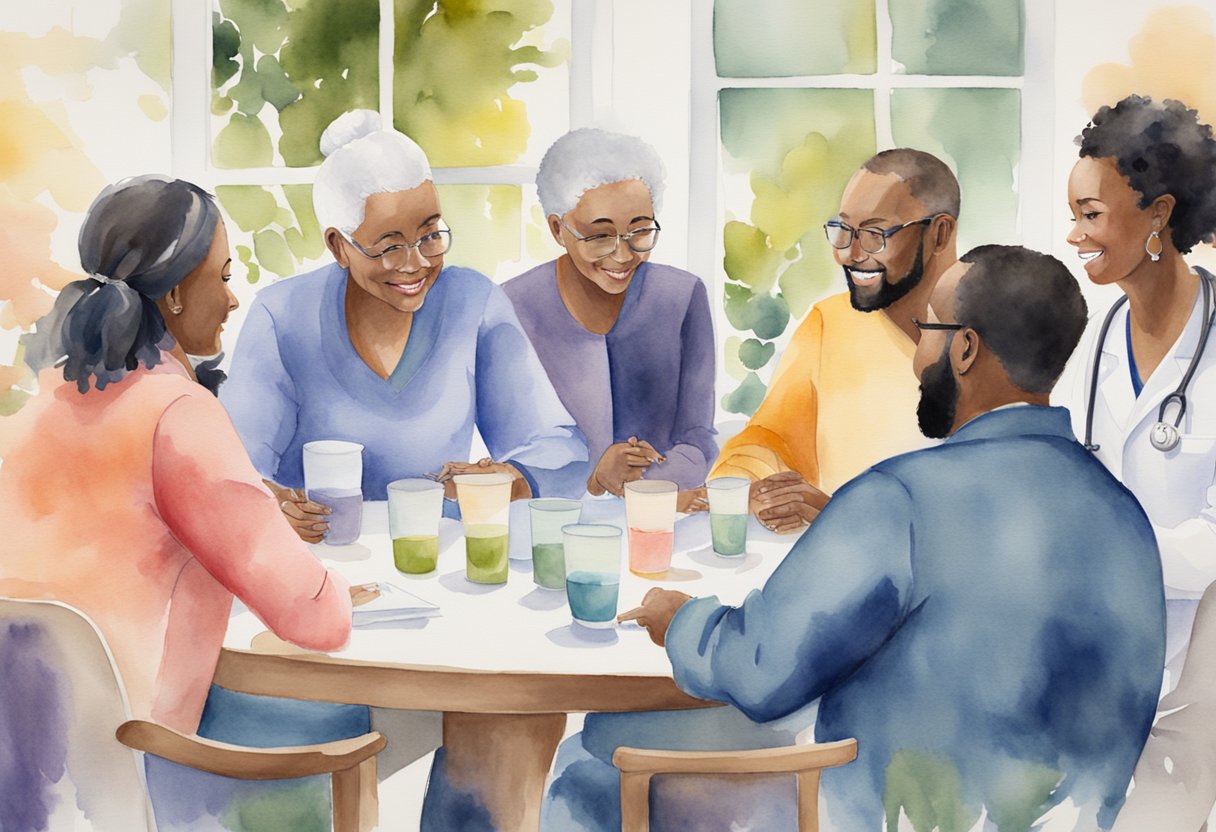
Navigating cancer treatment requires a blend of tenacity and strategy. We cultivate resilience and draw on collective strength, ensuring that treatment and support go hand in hand.
Collaborating with Medical Teams
Our Approach: We prioritize open communication with oncologists, nurses, and specialists. This collaborative effort is the cornerstone of our journey through cancer treatment. We ensure that each medical professional knows our personal treatment history, understanding that our body has unique challenges that require tailored care.
Medical Appointments: Stay organized with a robust schedule.
- First Visit: Share your complete medical history.
- Subsequent Visits: Bring notes on symptoms or queries.
Treatment Decisions: Involve various professionals in a comprehensive plan.
- Seek second opinions for major treatment decisions.
- Tailor your care plan to address our specific needs.
Managing Side Effects and Symptoms
Our Strategy: After facing down lymphoma, we’ve grasped the ebb and flow of treatment aftereffects. We’ve learned that it is critical to manage symptoms to maintain our quality of life proactively.
Physical Side Effects: From lingering fatigue to neuropathy, we tackle each with precision.
- Use chronic pain management techniques learned through rigorous experience.
- Recognize signs early to prevent escalation.
Emotional Well-being: Our mental health is as crucial as physical endurance.
- Engaging in peer networks improves our collective knowledge and emotional stability.
- Establish routines for mental clarity and focus.
By integrating medical expertise with our lived knowledge, we bolster our defenses against cancer by surviving and thriving.
Educational Resources and Coping Strategies
In our journey with cancer, knowledge, and resilience are crucial for us to thrive.
Navigating Cancer Care Education
As we face cancer alongside our medical teams, we must arm ourselves with credible information. The American Cancer Society offers up-to-date fact sheets that provide current figures and trends for various cancers, guiding us through awareness and understanding of the disease. For men tackling cancer, these ally in our pursuit of knowledge, equipping us with a solid foundation to make informed decisions about our care.
Strategies for Thriving During and After Treatment
We find strength not just through treatment but also by embracing effective coping strategies. The National Cancer Institute proposes questions we might discuss with our healthcare team, fostering clarity and control over our situation.
Sharing experiences and best practices through networks such as the Cancer Patient Education Network becomes a beacon of support. Moreover, as outlined by Stanford Medicine, coping techniques enable us to maintain emotional well-being, which is especially beneficial for us men in sustaining our mental fortitude.
Each step we take, each resource we use, steers us closer to thriving. Engaging with these tools, we pave our road to recovery and beyond with confidence and a clear-headed strategy.
Involvement in Community and Advocacy
As survivors who have faced lymphoma head-on, we understand the immense value of intertwining with our community and championing cancer awareness efforts. These actions propel us beyond our personal battles, allowing us to inspire and support fellow fighters.
Volunteering and Community Engagement
We discover strength in unity, extending our hands to volunteer at local cancer centers. By participating in these havens of hope, we facilitate meetings, arrange gatherings that spark joy, and share stories of triumph. This engagement offers a means to give back and gain perspective, reminding us that every contribution, regardless of size, honors our collective journey.
- Volunteer Roles: We take on roles from organizing events to offering peer support.
- Gathering Types: We host informal meetups and educational talks to boost morale and educate.
Advocating for Cancer Awareness
Raising awareness remains at the forefront of our struggle. We strive to keep the dialogue open, breaking down taboos associated with cancer in men. Through advocacy, we foster a climate where early detection is not a stigma but a save. We champion these causes not for accolades but to see the day when survival is the norm, not the exception.
- Outreach Efforts: Campaigns we initiate focus on demystifying the disease and promoting health checks.
- Awareness Channels: We use every avenue to amplify our message, from social media blasts to community marathons.
Final Thoughts…

Reflecting on our collective journey, we recognize the shared resilience that binds us. We’ve overcome not just once but twice the shadow that lymphoma casts on our lives. As thrivers, we extend a hand to our fellow men navigating this path.
Our connection is our fortress; we find strength and solace within our network. Group support reinforces our spirit, while psychosocial support options cater to our holistic well-being, nurturing both mind and spirit.
We stand together, steadfast in our commitment to helping each other. Whether it’s a conversation about managing side effects or sharing the thrill of a well-played match, our support transcends mere survival. We’re not just surviving; we’re fully mastering the art of living.
Here are some ways we can continue to thrive:
- Stay active: Physical health bolsters our recovery. Team sports are an excellent way to keep our bodies engaged and our spirits competitive.
- Cultivate connections: Our bonds with fellow survivors fuel our courage and offer invaluable insight.
- Seek counsel: Professionals in psychosocial support services are equipped to guide us through the complexities of our experiences.
We elevate ourselves and each other by forging ahead with determination and mutual support. Let’s champion this cause with the knowledge that every challenge we face is another opportunity for us to demonstrate that we are more than survivors—we are thrivers. -T
Frequently Asked Questions
In our journey through the complex world of cancer, we often encounter terms that require clarification and guidance to navigate the support networks available to us.
What distinguishes a cancer thriver from a cancer survivor?
A cancer thriver goes beyond mere survival, embracing an attitude of growth and purpose despite the diagnosis. We see every challenge as an opportunity to transform and emerge stronger.
How can someone locate cancer support groups in their local area?
Locating local cancer support groups can be as simple as consulting with our healthcare team or checking resources like the American Cancer Society. These groups often serve as beacons of communal solace, empowering us through shared experiences.
What are the benefits of joining a cancer support group, and are they considered adequate?
Joining a support group offers companionship, understanding from those on similar paths, and practical coping strategies. Consistently, members of these groups report a heightened sense of empowerment and well-being.
What are some considerations that oncologists might not inform patients about?
The subtleties of everyday life are often not covered in detail by oncologists. This includes changes in our self-image, relationship dynamics, or the emotional toll we might endure.
What strategies are known to enhance the longevity of cancer patients?
Adopting a lifestyle that promotes wellness, such as balanced nutrition and regular physical activity, can significantly enhance our longevity. Each stride we make is a triumph, contributing to our overall resilience.
How is the term’ cancer thriver’ commonly defined and used within the cancer community?
Within our ranks, the term’ cancer thriver’ symbolizes a person who lives life with vigor and intent despite a cancer diagnosis. We embody this term as we endure and strive to lead fulfilling lives.
