

Embracing Life as a Cancer Thriver

Living through the challenges of cancer brings a heightened awareness of the value of everyday moments that many may overlook. Life can sweep us up quickly, but after facing mortality head-on, the return to regular routines becomes worthy of celebration.
We know firsthand that these instances of normalcy provide a comforting continuity amidst the uncertainties that come with a cancer diagnosis.
Our experiences with cancer, whether lymphoma or any other type, teach us resilience and the importance of embracing a thriver mentality. We recognize the shadows cancer casts, yet we focus our energy on thriving, not just surviving.
This means seeking leading-edge treatments, connecting with robust support systems, and staying abreast of cancer education—all of which empower us to pursue a fulfilling life after cancer.
We are advocates for education and the emotional well-being of men battling cancer, drawing from our experiences to offer camaraderie and practical advice. Through these shared stories and struggles, we form a collective wisdom that reassures others they are not alone, fostering a community that thrives on solidarity and empathy.
Key Takeaways
- Celebrate everyday normalcy as a cherished aspect of the cancer journey.
- Embrace thriving with cancer through resilience and proactive treatment strategies.
- Foster robust support and education for a fulfilling life post-cancer.
Understanding Cancer and Its Impact

Cancer touches our lives profoundly, altering our perception of mortality and the value of everyday normalcy. We understand the gravity of the disease through its biological definition and each stage of diagnosis.
Defining Cancer
Cancer describes the abnormal growth of cells that have the potential to invade or spread to other parts of the body. There are many types, including Hodgkin’s Lymphoma, non-Hodgkin’s Lymphoma, and lung cancer. Each type affects our bodies differently, yet they share this fundamental uncontrolled growth characteristic. Invasive ductal carcinoma, for instance, is a common form of cancer that begins in a duct of the breast and invades the surrounding tissue.
Cancer Diagnosis Stages
Our encounter with cancer involves a rigorous process of diagnosis, typically broken down into various stages. The earlier cancer is detected, the more effectively it can be treated. Here’s a concise breakdown of diagnostic stages:
- Stage 0: Indicates abnormal cells with the potential to become cancerous.
- Stage I: Cancer is present but limited to where it began.
- Stage II and III: Represent higher degrees of spread within local regions.
- Stage IV: Cancer has spread to distant parts of the body.
For survivors like us, who have faced lymphoma not once but twice, these stages represent milestones in our journey. We share our experiences, providing a beacon of hope and a playbook for courage for men embroiled in a similar struggle.
In the power of our shared stories, we see the rays of joy in a life reclaimed. We find remarkable strength and resilience in the face of cancer’s challenges on the field, during a game, or within the quiet camaraderie shared post-match.
Embracing the Thriver Mentality

In the journey from cancer patient to thriver, we find strength in the shared survival language and the empowerment of our collective experiences.
From Patient to Thriver
We, as survivors, embrace a transformation that reshapes our existence, translating our trials into a driving force for a fulfilled life. Our collective resilience serves as the bedrock of this metamorphosis, propelling us not merely to exist but to flourish with vigor. We rally around the notion of thriving, a powerful testament to our capability to rise above our circumstances.
- Resilience: Our ability to rebound
- Empowerment: Seizing control of our life’s narrative
- Hope: Carrying the torch that brightens our path forward
The Language of Thriving
Thrive. The word itself commands a sense of dynamism, a leap beyond the mere act of survival. Our vocabulary shapes our reality — calling ourselves thrivers speaks to our conquests and instills a sense of forward momentum. We celebrate each victory, minute or glorious, as a testament to our courage.
- Thriver: One who transforms challenges into growth
- Experience: The complex odyssey we navigate
- Language: The words we choose that reflect our inner strength
Treatment Options and Advances

As survivors, we understand that each milestone in our journey is significant — whether it’s a breakthrough in cancer research or advances in treatments that offer us more vibrant moments of normalcy.
Navigating Treatment Choices
Facing the lineup of treatments available can be daunting, but we’re here to sift through the options together. From established procedures like surgery, chemotherapy, and radiotherapy to cutting-edge alternatives such as targeted therapy and immunotherapy, each path offers a promise of healing.
Groundbreaking developments in cancer care are equipping us with more precise weapons in this battle, with treatments like stem cell therapy and targeted therapy. Special attention to tailored, individual plans maximize our health, ensuring survival and thriving.
Research and New Avenues
Rigorous research fuels novel opportunities that can change the game for us. Clinicians and researchers tirelessly work to improve our outcomes, developing innovative treatments that are less intrusive and better aligned with our bodies. The emergence of chemodynamic therapy and ferroptosis-based therapy is redefining the cancer treatment landscape.
With advancements like these, we remain hopeful as we endure our ordeals with unwavering courage and strength. Survival rates are climbing; let’s embrace these encouraging trends and the relentless efforts backing them, leading to reduced mortality rates, as reflected in studies on lung cancer treatments and the subsequent improvements in population mortality.
The Role of Support Systems
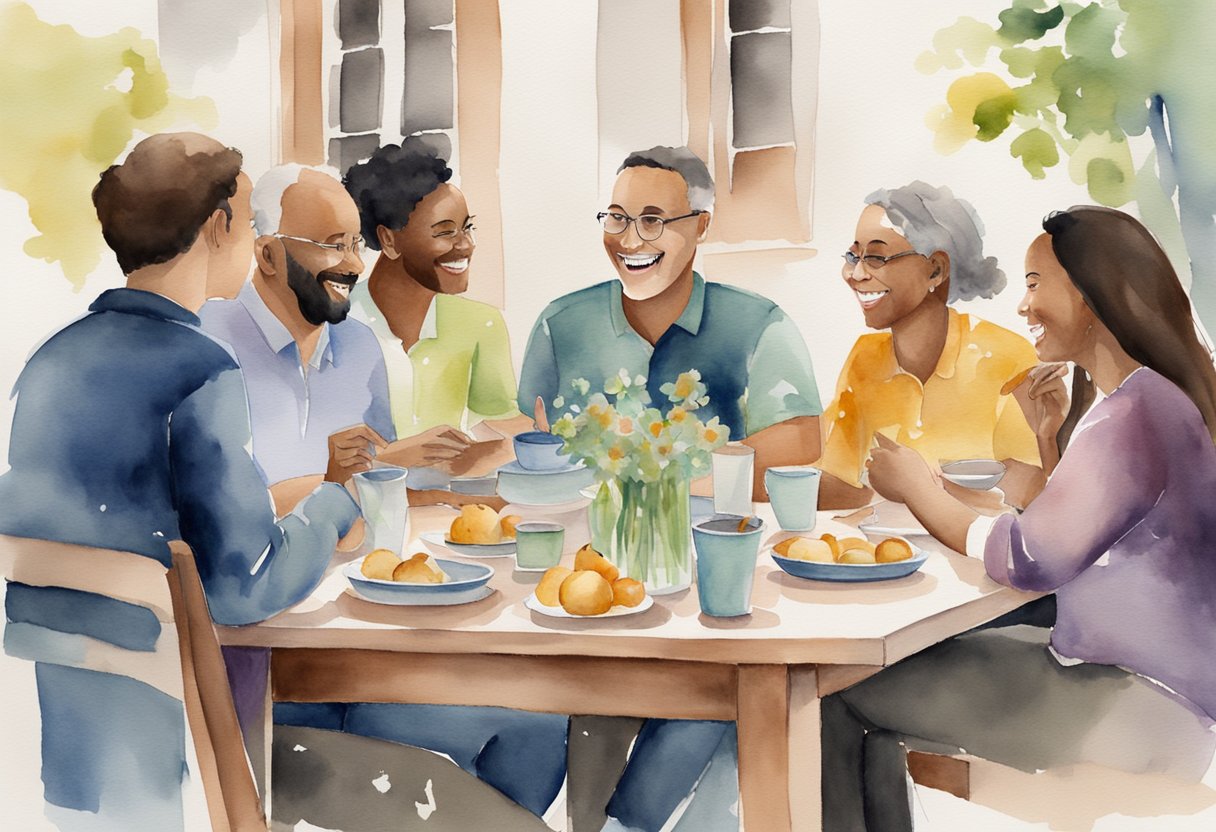
Within the journey of confronting mortality after surviving cancer, we often discover the sheer resilience imparted by a robust support system. Its unyielding presence becomes a source of strength and normalcy.
Family and Friends Influence
We find unexpected heroism within the circles of our loved ones; their consistent presence fosters a sense of security and companionship. When we talk among our brothers and allies, they offer more than just words; they provide actionable assistance that lightens the load of our daily battles. Our sisters and friends might cook a meal, drive us to appointments, or share a laugh, subtly threading normalcy into our lives.
- Actions by Family and Friends:
- Meal preparation
- Transport to medical appointments
- Shared activities to uplift spirits
Community and Support Groups
Community and specialized support groups emerge as beacons for us, mainly catering to the unique trials faced by men. In these groups, we share experiences, ridding ourselves of the solitude that illness often brings. We bond over shared challenges by engaging in these communities, bolstering our courage and leading us toward collective resilience. Such camaraderie affirms our situation is understood, easing the emotional toll cancer inflicts.
- Community and Support Benefits:
- Shared experiences reduce feelings of isolation
- Information exchange about managing day-to-day life
- Building collective resilience through storytelling and sharing strategies
Through familial engagement and support groups’ collective wisdom, we weave a safety net that cradles our hope, encourages survival, and celebrates every victory.
Cancer Awareness and Education

Informed communities and educated individuals stand stronger against cancer. Awareness of this disease leads to early detection, significantly increasing survival rates.
Lymphoma Awareness Month
September marks the observance of Lymphoma Awareness Month. Recognition of this month is pivotal as it sheds light on the specific challenges faced by those battling lymphoma—including men like us—who often experience unique issues during and after the course of their treatment. We use this time to unite and share experiences, which bolsters our collective resilience.
Educational Initiatives
Education serves as the backbone of effective cancer prevention and management. A wealth of educational initiatives aim to empower survivors and the larger community. Whether through community programs or tailored health campaigns, these initiatives underscore the necessity of understanding cancer’s complexities. Learning about the symptoms, treatment options, and supportive care can transform lives.
By focusing firmly on realities, including fostering a strong educational foundation on cancer-related issues, we enhance our capacity to thrive post-diagnosis. Through the dissemination of knowledge and personalized support, we’re arming ourselves with the best defense in our ongoing confrontation with cancer.
Psychological and Emotional Journey
In our collective experience, the path to thriving after cancer is marked by emotional resilience and a redefined sense of self. Here, we’ll navigate the psychological terrains of fear and the rebuilding of self-esteem.
Coping with Emotions and Fear
As we wrestle with the shadow of cancer, our emotional landscape undergoes a seismic shift. The initial diagnosis instigates a surge of fear and uncertainty; it’s as if life itself hangs in the balance. Yet, through this adversity, we discover our inner fortitude. Support groups and therapy sessions become sanctuaries where we exchange stories and strategies, crafting shields against the onslaught of emotions. Counseling or art therapy can serve as outlets, helping us to express and understand our fears.
- Strategies for coping:
- Seeking solace in peer support groups
- Pursuing professional counseling
- Engaging in creative expression
We learn to cherish the stillness of moments once overlooked—the warmth of the sun and the coolness of the breeze. Men, in particular, often grapple with the notion that vulnerability equals weakness, but we see it as a form of bravery, a stepping stone to healing.
Recovery and Self-Esteem
In the wake of treatment’s tribulations, our physical and psychological selves may feel battered. Each victory, be it a clear scan or a whole night’s rest, fosters a renewal of self-esteem. We begin to view our scars not as marks of frailty but as medals earned in battle.
Engaging in sports and physical activities gifts us a sense of accomplishment, a testament to our resilience. Whether hitting a new lap time in the pool or scoring a goal on the soccer field, each triumph carves a piece of our reclaimed identities.
- Actions for self-esteem:
- Participating in team sports or individual fitness routines
- Setting and achieving personal goals
- Celebrating small victories in daily life
Together, we navigate the ebb and flow of post-cancer life, embodying a fraternity bound by shared experience—a brotherhood of thrivers finding profound appreciation in the normalcy of life’s everyday pleasures.
Celebrating Life Beyond Cancer
After triumphing over lymphoma not once but twice, we’ve become acutely aware of the profound beauty in the everyday normalcy we once overlooked. This journey has instilled in us a drive to guide fellow survivors, especially men navigating the path of post-cancer life, to honor these moments of newfound normalcy.
Finding Joy in Normalcy
We swap stories with other thrivers, tales of mundane moments – like cheering for our children at soccer games or enjoying quiet mornings with a newspaper – now pulse with significance. Following the tumult of treatment, those instances echo pre-cancer days are treasures. They offer us a sense of comfort and continuity that sustains us, grounds us, and restores a piece of our identities that cancer tried to claim.
- Cherished Routine:
- Morning coffee ritual
- Weekend family barbecues
- Playing catch with our dogs
No Evidence of Disease
When our oncologists utter the words “no evidence of disease,” it’s a declaration that propels us from patients to thrivers. It’s not merely the absence of cancer; it’s a call to embrace life with vigor and purpose. We mentor, volunteer, and advocate, becoming a beacon for other men who might feel adrift in the uncharted waters of remission.
- Life Post-Remission:
- Advocate: Speak at cancer support groups.
- Mentor: Provide one-on-one guidance to newly diagnosed men.
- Volunteer: Participate in community fitness events to promote healthy living.
Our collective experiences and shared bravery in the face of lymphoma fuse into a resolve to celebrate every victory – both on the medical charts and in the moments we reclaim for ourselves, no matter how small they seem. We rise from our challenges not just as survivors but as thrivers, embracing life beyond cancer with determination and joy.
Final Thoughts…
As we walk this journey together, each step echoes the resilience we share. Our battles with lymphoma may have etched deep marks into our lives, but look at us now—embracing the routine coffee runs, the laughter with friends, and the thrill of a ball game. These moments, once ordinary, now shine with an extraordinary light.
We reach out to our fellow men, understanding each other’s silence when words fall short. The shared nods, the mutual respect—the brotherhood of survivors that transcends words. Our hearts swell with empathy, not pity, as we stand side by side.
| Cherishing Normalcy | Creating Bonds | Healing Through Sports |
|---|---|---|
| Morning jogs | Support groups | Football matches |
| Family dinners | Volunteer service | Basketball leagues |
| Work accomplishments | Shared stories | Team training |
United in our scars, we find strength. We inspire one another to reach for health, mentor, and seize today. Our wisdom, a beacon for those still in the fight, radiates hope. Together, we cultivate a legacy of triumph and guide others to the safe harbor of acceptance and renewal.
Let us remain vigilant, champions in our domain—because every shared victory on the field mirrors a personal victory against a formidable foe. Our legacy? It is a testament to the spirit of unity, perseverance, and an unwavering commitment to celebrating life each day, every day. -T
Frequently Asked Questions
In facing cancer, we often find strength in common queries surrounding our journey toward healing and embracing life anew.
How can individuals embrace daily life despite a cancer diagnosis?
Cancer, while daunting, can’t strip the vibrancy from our daily lives. We seek joy in simple pleasures, from the warmth of morning sunshine to the camaraderie of watching our favorite team play ball.
What are the key differences between ‘thriver’ and ‘survivor’ in the context of cancer?
‘Thriver’ implies vitality beyond survival; it’s about flourishing amid a cancer journey. Whereas ‘survivor’ emphasizes the continuation of life past cancer, ‘thriver’ celebrates the robust quality of that life, especially after facing a disease like lymphoma.
What are some common misconceptions about living with cancer?
Many believe cancer confines a person to a life of constant suffering, but this overlooks our capacity for resilience and the moments of wellness we experience. Also, the idea that men don’t face emotional struggles with cancer is a harmful myth we’re here to dispel.
How can someone manage the fear of mortality after a cancer diagnosis?
Addressing this fear involves focusing on what we can control: attending all soccer practices with our kids, keeping up with the latest sports news, or planning fishing trips. Redirecting energy to present experiences helps manage the uncertainty regarding mortality.
What information should patients consider when communicating with their oncologist?
In our discussions with oncologists, clarity matters. We convey our symptoms and concerns, not shying away from the harsh realities of treatment effects, ensuring we’re informed and actively participating in our healthcare decisions.
What are inspiring stories of long-term survival with advanced-stage cancer?
Stories abound of those who have lived far beyond initial prognoses, engaging in sports and hobbies they love. These narratives give us hope and encouragement as exemplars of tenacity and the will to lead fulfilling lives despite the odds.
